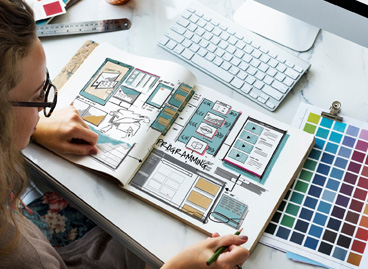


Conversion-Focused Design: Turning Visitors into Customers
A professionally designed website is not only visually appealing but also optimized to convert visitors into customers. Every design element, from the layout to the call-to-action buttons, should be strategically placed to encourage conversions. Conversion-focused design is about guiding visitors through a seamless journey, from the first impression to the final action, whether that’s signing up for a newsletter, making a purchase, or filling out a contact form.
Clear Calls-to-Action (CTAs): Effective CTAs are one of the cornerstones of conversion-focused design. Place prominent CTAs in strategic locations, such as the top of the page, mid-content, or at the end of sections, to guide visitors toward specific actions. Use actionable language like “Get Started,” “Book a Demo,” or “Shop Now” to drive engagement.
Streamlined Navigation: Users should be able to find information effortlessly, so it’s crucial to keep navigation simple and intuitive. Avoid overcrowding the menu with too many options. Instead, focus on highlighting essential pages like Services, About Us, and Contact. When users can easily find what they’re looking for, they’re more likely to follow through with conversions.
Incorporating Social Proof: Testimonials, customer reviews, and case studies are powerful forms of social proof that can significantly impact conversions. By showcasing positive feedback and real-life success stories, you build trust and credibility, encouraging visitors to take the next step with confidence.
3. Mobile Optimization: Reaching Audiences on the Go
With mobile devices accounting for a majority of web traffic, mobile optimization is an integral part of web design in 2024. A mobile-optimized website adapts to various mobile devices, providing a user-friendly experience that encourages visitors to stay and explore. Google also prioritizes mobile-optimized websites in search rankings, making this an important factor for visibility and user engagement.
Fast Loading Times: Mobile users expect pages to load quickly, with a lag of even a few seconds potentially causing users to abandon the site. Optimize images, leverage browser caching, and minimize redirects to ensure faster loading times on mobile.
Touch-Friendly Navigation: On mobile, users rely on touch rather than a mouse. Buttons, links, and interactive elements should be easily tappable, with adequate spacing to avoid accidental clicks. Additionally, avoid pop-ups or features that are hard to close on mobile, as these can frustrate users and increase bounce rates.
Focus on Essential Content: Mobile users often seek quick answers or specific information. Structure your content so that the most important information appears prominently on mobile screens. This approach keeps users engaged and helps them find what they need with minimal scrolling.
4. SEO-Optimized Design for Enhanced Visibility
An SEO-optimized website design is essential for improving visibility on search engines like Google. Professional web design goes beyond visuals, incorporating SEO best practices to ensure your site can be easily found by potential customers. When your website is optimized for SEO, it ranks higher in search results, driving organic traffic and increasing exposure.
Keyword-Rich Content: Conduct keyword research to understand the terms your audience is searching for, and integrate those keywords naturally throughout your website’s content. Focus on using relevant keywords in page titles, meta descriptions, headings, and body content.
Optimized Images and Media: Use descriptive file names and add alt text to all images to help search engines understand their content. Optimized images load faster and improve user experience while contributing to your site’s SEO.
Internal Linking: Linking related pages within your site helps search engines understand your site structure and can improve your search rankings. It also provides a better user experience by guiding visitors to relevant content, keeping them on your site longer.
Clean Code and Site Structure: Simple, clean code enhances loading speeds, making it easier for search engines to crawl and index your site. A well-organized site structure, with clear categories and subcategories, improves user experience and search rankings.
5. Accessibility: Making Your Website Inclusive for All Users
Accessibility is a crucial aspect of professional web design, ensuring that all users, including those with disabilities, can navigate and interact with your site. Making a website accessible not only broadens your audience but also demonstrates your commitment to inclusivity and enhances your brand’s reputation.
Keyboard Navigation: Some users rely on keyboards rather than mice to navigate websites. Ensure that all interactive elements, including menus, buttons, and forms, are accessible via keyboard alone. Proper focus indicators, such as highlighting elements when selected, are essential for smooth keyboard navigation.
Screen Reader Compatibility: Design elements, especially images, should include descriptive alt text to assist users who rely on screen readers. Use semantic HTML tags (e.g., <header>, <main>, <nav>) to provide context, making it easier for screen readers to interpret the content.
Contrast and Font Size: High contrast between text and background colors is essential for readability, especially for users with visual impairments. Choose fonts that are easy to read, and allow users to adjust font sizes on the website as needed. Simple, clear typography enhances accessibility for all users.
Conclusion
In 2024, professional web design is about more than just a beautiful layout—it’s about creating a website that drives conversions, engages users, enhances search visibility, and supports accessibility. By incorporating responsive design, conversion-focused strategies, mobile optimization, SEO, and accessibility, businesses can build a website that stands out in a crowded online landscape.
For businesses aiming to make a strong online impact, partnering with an experienced web design agency like Design Ranks can provide the expertise needed to create a high-performance website. Investing in professional web design doesn’t just improve aesthetics; it lays the foundation for lasting success in the digital world. Whether you’re a new brand or an established business, these strategies will help you build a site that attracts, engages, and converts—driving your business toward greater growth in the coming year.